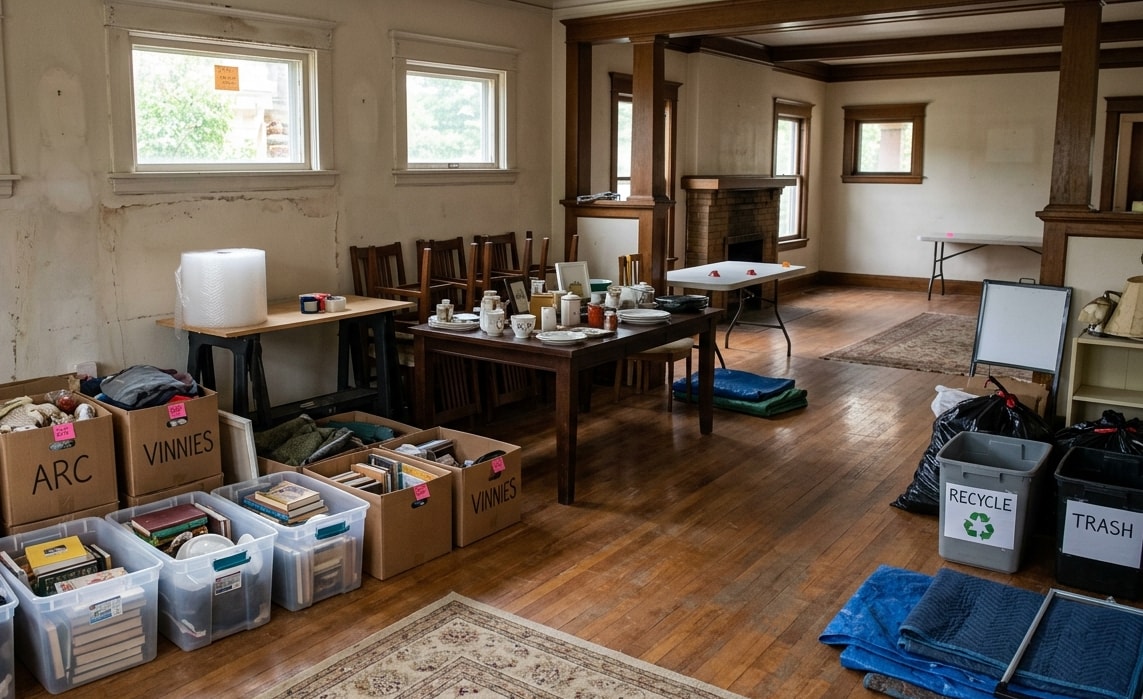
If you're faced with selling the household belongings of an entire home, one logical question is: what happens to the estate sale leftovers? Even the most successful estate sales rarely sell everything. In fact, a typical sale sells only 70% to 95% of the total inventory.
In this Mile High Estate Sales article, we answer the question, “Who buys estate sale leftovers?” so you can connect with these people and companies to liquidate an estate.
Why Estate Sale Leftovers Are So Common
Estate sales often sell only about three-quarters of the items in a home, depending on pricing, demand, and inventory levels. Items may not have sold due to:
- Overpricing compared to market demand
- Damaged or incomplete pieces
- Outdated items like niche furniture
- Not enough time to attract buyers in just two to four days of a sale
Estate sale leftovers are completely normal, yet planning for them is an essential part of any estate sale strategy.
What Happens to Estate Sale Leftovers After the Sale Ends
The process of dealing with estate sale leftovers begins immediately, especially since most homes have to be completely cleared out within a week or less afterward.
Once a sale has concluded, the next step is to evaluate what's still worth selling vs. what should be donated or thrown away. A fourth option is to hire a clean-out service, which we can help you coordinate or fully handle.
Option 1: Selling Estate Sale Leftovers After the Sale
Individual buyers and resellers often buy estate sale leftovers through secondary markets, such as Facebook Marketplace, eBay, and Craigslist. If you have high-value items left over, you might look into:
- Consignment shops for furniture, antiques, and designer goods
- Auction houses for rare collectibles
- Bulk sales to resellers to move items out quickly
Selling in bulk to resellers can move items out of your way quickly, but this approach typically yields only 20% to 50% of the resale value. Once you identify who buys estate sale leftovers near you, you can target those buyers and maximize the value of the items. However, this process could require time, effort, and storage you don't necessarily have.
Option 2: Donating Leftover Estate Sale Items
Another idea is to donate leftover items to save time and effort. Popular donation recipients include Goodwill, Salvation Army, and Habitat for Humanity. Benefits of donating include:
- Some charities offer free pickup for quick removal
- Potential tax deductions for donated items
However, please note that charities may not accept certain large, bulky items such as furniture or items that are damaged. Donations are best for usable, low- to mid-value items in good condition, such as clothes, kitchenware, and home décor.
Option 3: Hiring an Estate Clean-Out Company
Hiring a professional clean-out service is often the best choice if your priorities are speed and convenience. Estate clean-out services like ours include:
- Packing and sorting
- Donation coordination
- Hauling away and disposal
We can complete most jobs in just one or two days, with a flat fee or a volume-based rate, often between $500 and $5,000. No homeowner labor is required for this fast and easy option, making it worth the cost for busy families.
Option 4: Junk Removal and Disposal
For estate sale leftovers with little to no resale value, junk removal may be the most cost-effective option. Keep in mind:
- Dumpster rentals are usually between $300 and $800
- Junk-hauling companies typically require items to be gathered in a single area for pickup
- Common items disposed of this way: broken furniture, old mattresses, and non-functional appliances
The process is quick and straightforward, yet there's no financial gain. Consider junk removal for unsellable or poor-condition items, and choose companies that recycle materials when possible to reduce environmental impact.
Who Buys Estate Sale Leftovers Near Me?
There are several types of buyers to look for, including:
- Antique dealers for valuable pieces
- Thrift stores for everyday goods
- Flea market vendors looking for inexpensive inventory
- Individuals who are resellers and flippers
- Liquidators who purchase the entire remaining estate at a discounted rate
When Storing Leftover Items Makes Sense
You might consider storing unsold items if they are sentimental or have great value and simply require more time to sell. Storage units typically cost between $50 and $300 per month, yet long-term storage can exceed the value of the items. Before moving items to storage:
- Set a clear timeline for your strategy, such as selling everything within six months
- For sensitive items like antiques, upgrade to a climate-controlled unit for protection
- Avoid storing low-value items that will cost more to store than they're worth
How to Decide What to Do With Leftovers
To decide what happens to estate sale leftovers, evaluate each item based on its value and condition:
Make sure to factor in your timeline (tight or flexible) and your effort level to decide between a DIY approach vs. hiring a professional.
Common Mistakes When Handling Estate Sale Leftovers
- Overestimating the value of unsold pieces
- Not making a leftovers plan until the sale ends
- Not budgeting for cleanup costs
- Trying to sell everything individually
- Neglecting tax deduction opportunities
- Choosing the cheapest option rather than the most efficient one
- Underestimating the labor involved in the cleanup
- Holding onto items indefinitely in storage
Pro Tips to Minimize Estate Sale Leftovers
Instead of being caught off guard and overwhelmed with excess stuff, here's how to reduce the amount of leftovers early on in your sale:
- Price items correctly in the beginning
- Bundle low-value items
- Advertise your sale to attract buyers
- Offer early access to dealers
- Allow negotiation at the end of the sale
- Discount items after the first sale day
FAQs About Estate Sale Leftovers
Here are answers to common questions we receive about estate sale leftovers. For additional information, please visit our FAQ page or call us at 303-204-4464.
What percentage of items typically don't sell at an estate sale?
Between 5% and 30% of items typically remain unsold after an estate sale.
Is it better to donate or sell leftover estate sale items?
Consider selling high-value items and donating lower-value belongings for fast removal.
How quickly do I need to remove estate sale leftovers?
Many homes must be cleared out between one and seven days after an estate sale.
Do estate sale companies handle leftovers for you?
Many companies, including ours, are happy to handle the cleanup and leftovers coordination as part of a package or as an add-on service.
Can I make money from leftover estate sale items?
Yes, especially if you can sell high-value items online or in bulk to resellers.
What's the fastest way to clear out an estate after a sale?
The quickest and easiest way to get rid of unwanted items is usually to hire a clean-out company.

Mile High Estate Sales
Colorado's trusted estate sale professionals with over 10 years of experience helping families through life's transitions.
Schedule a Free Consultation