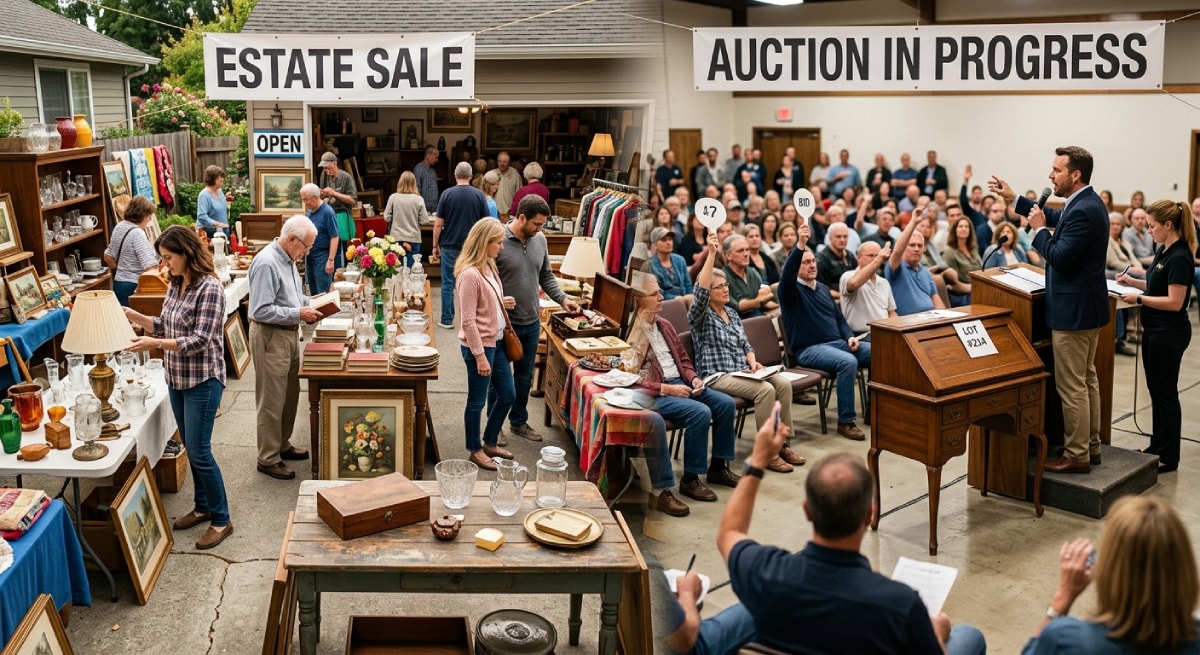
When you're faced with the task of liquidating an estate, there's no one-size-fits-all solution. Since every home and family involves unique circumstances, choosing between an estate sale and an estate auction is an important decision.
Both strategies can successfully sell personal property, but they operate very differently depending on the value of your items, how much you need to sell, your timeline, pricing control, and buyer demand. At Mile High Estate Sales, we're here to help you compare the pros and cons of estate sales vs. estate auctions to determine the best fit for your situation.
What Is an Estate Auction?
How Estate Auctions Work
What is an estate auction? It's a way to sell personal property through competitive bidding, where the highest bidder buys each item. There are live, in-person auctions, online estate auctions, and hybrid auctions that combine these two formats.
Auctioneers or online bidding platforms manage the process of cataloging, photographing, and marketing items. Prospective buyers compete against each other, driving prices by current market demand rather than fixed price tags. At the end of bidding, winners pay for their purchases and arrange for pickup or shipping.
What Types of Items Sell Best at Estate Auctions?
Estate sale auctions often work well for:
- High-end antiques
- Original artwork
- Valuable jewelry
- Rare furniture
- Coins and currency collection
- Vintage memorabilia
- Luxury goods
- Firearms, where legally permitted
How Estate Sales Differ from Estate Auctions
Estate Sale Overview
Meanwhile, traditional estate sales offer a very different shopping experience. Instead of bidding, professional estate sale companies like ours price items individually before the sale and handle everything from staging and advertising to managing the entire event.
Shoppers walk through a home room by room during the sale event to select items for purchase. Estate sales are ideal for liquidating the contents of an entire household, not just its most valuable pieces.
Estate Sale vs. Auction at a Glance
| Comparison | Estate Sale | Estate Auction |
|---|---|---|
| Pricing Structure | Fixed pricing | Competitive bidding |
| How Items Sell | First buyer purchases item | Highest bidder wins |
| Best For | Ideal for entire households | Best for specialty valuables |
| Price Determination | Prices can be discounted over time | Final price determined by bidders |
| Format | In-person shopping experience | Live, online, or hybrid formats |
Pros of Estate Auctions
Competitive Bidding Can Increase Value
Among the biggest advantages of estate auctions is competitive bidding. Prices can rise above initial expectations when multiple buyers compete for the same item. Antiques, collectibles, artwork, and rare memorabilia often benefit from this dynamic.
Faster Sales Timeline
Estate sale auctions typically have clearly defined start and end dates. This is helpful when families are facing home sales, probate deadlines, or inherited property that needs to be quickly cleared.
Transparent Market Pricing
Instead of guessing an item's value, buyers determine it through bidding. For this reason, estate auctions are useful for rare and hard-to-price collectibles.
Wider Buyer Reach Through Online Auctions
Online estate auctions have the potential to attract buyers nationwide, not just locally. Larger audiences create competition and help increase value for specialty items.
Cons of Estate Auctions
Sale Prices Are Never Guaranteed
When buyers bid on estates, there's no guarantee that prices will be higher. Market demand determines the final price, so if buyer interest is lacking, items can sell for less than expected.
Auction Fees and Commissions
Auction companies typically charge commissions based on total sales, so you'll need to factor this into your budget.
Not Ideal for Everyday Household Items
Basic types of furniture, kitchenware, clothes, and décor usually only attract limited bidding at best. These items tend to perform better at traditional estate sales where shoppers are looking for practical purchases.
Pros of Estate Sales
Better for Selling an Entire Household
Estate sales are effective in liquidating hundreds or even thousands of items from a home, such as furniture, clothing, décor, kitchenware, and other household goods.
Greater Pricing Control
Unlike estate auctions, you can establish pricing before an estate sale begins. Professional companies often adjust pricing over multiple days to encourage sales while maintaining control over the liquidation.
Buyers Can Inspect Items in Person
At an estate sale, buyers can browse items inside the home to make informed decisions about the goods.
Professional Estate Sale Companies Handle the Work
Full-service companies manage every step of an estate sale, including organizing, staging, researching, and pricing items. They also advertise the sale, manage crowds, process payments, coordinate donations, and remove unsold inventory.
Cons of Estate Sales
Valuable Items May Sell Below Market Value
Fixed pricing at an estate sale may underestimate the value of rare antiques and collectibles. For this reason, auction estate sales with competitive bidding may be a better option.
Sales Can Take Multiple Days
Estate sales typically last two or three days, requiring on-site staffing and handling of unsold inventory.
Success Depends on Local Foot Traffic
Your estate sale's attendance may depend on your neighborhood location, advertising efforts, local interest, and even the weather.
Estate Sale vs. Auction: Which Option Is Right for You?
Choose an Estate Auction If You Have...
- Valuable antiques
- Expensive jewelry
- Fine artwork
- Rare collectibles
- Luxury goods
Choose an Estate Sale If You Are...
- Liquidating an entire household
- Mostly selling low-cost everyday belongings
- Wanting a more predictable pricing structure
- Interested in creating a traditional shopping experience
When a Hybrid Approach Makes Sense
However, sometimes the best solution combines both of these strategies. You could sell premium collectibles in an estate sale auction while liquidating remaining household items in a traditional estate sale.
During a consultation, our experienced estate liquidation professionals can help you identify which items are best suited for each approach.
Factors to Consider Before Choosing
Value of Your Items
A professional evaluation will objectively help you distinguish valuable items from everyday goods.
Timeline for Liquidation
Your time and availability matter and can influence whether an estate auction or sales make the most sense.
Desired Level of Involvement
Consider whether you have the time and energy to be fully hands-on or prefer to collaborate with experienced professionals to handle the burden of managing every detail.
Local vs. National Buyer Demand
While everyday household items sell well at local estate sales, rare collections fetch higher prices when buyers across the country can bid on estates through online auctions.
How Professional Estate Sale Companies Help You Decide
Item Evaluation
Our team will assess your estate, identify auction-worthy pieces, and recommend the most effective liquidation strategy.
Marketing and Buyer Outreach
We are skilled at targeted promotion through estate-sale advertising, auction listings, email newsletters, social media, and collector networks to attract sales.
End-to-End Estate Liquidation Services
From organizing and staging to pricing, selling, payment processing, item pickup, donations, and final cleanout, we'll handle all the details so you can focus on moving forward.
Frequently Asked Questions
Here are answers to common questions we receive about estate auctions and sales. To learn more, visit our FAQ page, call us at 303-204-4464, or contact us online.
What is an estate auction?
Estate auctions are competitive bidding events in which you sell personal property to the highest bidder, in person, online, or both.
Are estate auctions better than estate sales?
Neither is inherently or universally better. An estate sale auction is best for rare and valuable items, while traditional estate sales are well-suited to liquidating the contents of an entire home.
Can I sell only certain items at an estate auction?
Many sellers auction off only their highest-value pieces but sell everything else through a traditional estate sale.
How do buyers bid on estates?
Buyers can place bids in person, online, or via a hybrid platform that supports remote participation.
Do estate sale companies also offer estate sale auctions?
Mile High Estate Sales has expertise in facilitating both traditional estate sales and estate sale auctions.
Which option usually makes the most money?
Rare, high-value items often perform best at auctions, while homes filled with common household goods may generate stronger returns through a professionally managed, traditional estate sale.

Mile High Estate Sales
Colorado's trusted estate sale professionals with over 10 years of experience helping families through life's transitions.
Schedule a Free Consultation